How to Take Tattoo Appointment Bookings Online (for Artists & Studios)
By Calvy Team · June 27, 2026
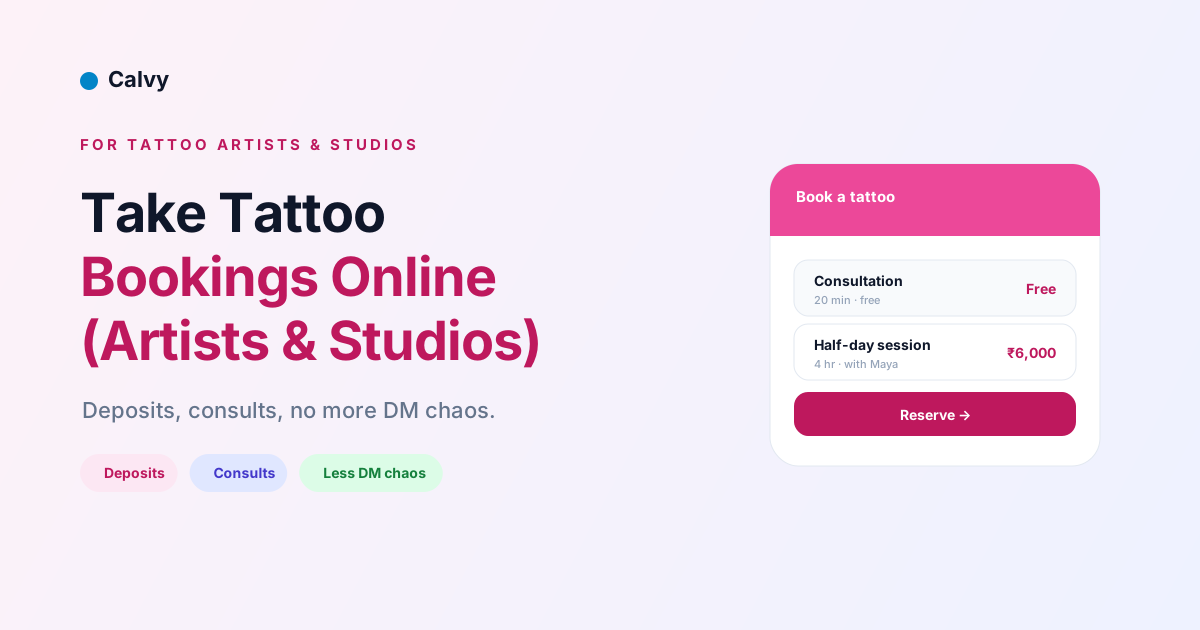
Ask most tattoo artists what they like least about the business side, and the answer is usually the same: the endless DMs. Fielding booking enquiries across Instagram, chasing deposits, managing a calendar in your head, and absorbing the no-shows that turn a planned full-day session into a wasted, unpaid one. Online booking solves all of it — letting clients see your availability, book themselves, and pay a non-refundable deposit up front, while you get back to the actual art.
This guide is a practical walk-through for tattoo artists and studios: how to take bookings online, how deposits protect you, how to handle consultations for custom work, how to cut no-shows, and how to set the whole thing up without losing the personal, Instagram-driven nature of how tattoo clients find you. Whether you're a single artist or a studio with a team, the goal is the same — a full, well-managed calendar with far less admin and far fewer wasted days.
Why the DM-and-deposit grind holds artists back
The traditional tattoo booking process is a grind that scales badly. Enquiries arrive scattered across DMs and messages, each needing a back-and-forth about design, size, placement, availability, and price. Deposits are requested manually and chased awkwardly. The calendar lives in your head or a notebook, vulnerable to double-bookings and forgotten slots. And because nothing binds the client until they're in the chair, no-shows and last-minute cancellations are constant — each one a wasted day you can't easily refill.
This grind doesn't just cost time; it costs money and energy that should go into your work. Every hour spent untangling DMs is an hour not tattooing, and every no-show is a day's income gone. As an artist gets busier, the admin load grows until it becomes a genuine bottleneck. Online booking attacks the root of all of it by moving bookings, deposits, and your calendar into one system that runs itself, freeing you from the grind that holds so many talented artists back from focusing on the art.
What online booking changes for a tattoo artist
Moving online transforms the daily reality of running your books. Clients see your real availability and book themselves into it, so the back-and-forth shrinks to almost nothing. Deposits are collected automatically at the moment of booking, so you never request or chase them again. Your calendar lives in one reliable place, visible at a glance, with no double-bookings. Reminders go out automatically, so sessions aren't forgotten. And the no-shows that used to wreck your week become rare, because every booking carries a deposit.
The result is more time in the chair and less at the phone, more income protected by deposits, and a calmer, more professional operation. It also makes you look more established to clients — a clean booking link signals that you run a real business, which builds trust, especially with new clients committing to expensive custom work. None of this changes your art or your style; it just removes the administrative friction around getting booked, so your talent isn't bottlenecked by paperwork.
Setting up your services and session lengths
The foundation is translating how you work into bookable services. Tattoo sessions vary enormously in length, so set up services that reflect that — a small piece might be an hour, a larger one a half-day or full-day session, and complex work might span multiple sessions. Give each an honest duration so your calendar schedules realistically and you're never squeezed.
Think about how you price and how that maps to booking. Some artists book by session length at a set rate; others quote per piece after a consultation. You can support both: offer fixed-length session bookings for standard work, and a consultation-first path for custom pieces that need discussion before a price and time can be set. Getting your services and durations right once means your booking page accurately reflects what you can actually do in a day, which protects you from overcommitting and keeps your sessions running smoothly. Spend the time here — it's the structure everything else rests on.
Deposits: the heart of tattoo booking
For tattoo artists, the single most important feature of online booking is the deposit, because it's your protection against the no-shows that make the business so volatile. A tattoo session ties up a long, valuable block of your time, and a no-show on a full-day booking is a financial hit you can rarely recover at short notice. A non-refundable deposit, taken at booking, changes the dynamic entirely.
Set a deposit amount appropriate to the session — larger sessions warrant larger deposits — and have the client pay it when they book. The deposit secures the slot, is typically applied to the final cost, and is forfeited if the client cancels late or fails to show. This gives clients real skin in the game, filters out the casual enquiries that were never serious, and compensates you when someone does flake. Booking software collects the deposit automatically through cards, wallets, or UPI, so it's handled the instant a client books, with no awkward asking. Calvy, for instance, takes deposits natively via Razorpay. Our guide to accepting online payments for appointments covers the mechanics.
Handling consultations for custom work
Custom tattoo work usually needs a conversation before it can be booked — about the design, size, placement, and price — and online booking handles this cleanly through a separate consultation option. Rather than forcing every enquiry into a full session booking, you offer a short consultation appointment, often free or low-cost, where you discuss the piece and plan it properly.
This serves several purposes. It lets you screen enquiries and assess whether a project is a good fit before committing chair time. It gives you the information to quote accurately and plan the session length. And it keeps your main session slots reserved for confirmed, deposited work rather than tentative ideas. After a productive consultation, the client books their actual session — with a deposit — through the same system. Structuring custom work this way brings order to what's otherwise a messy, open-ended DM negotiation, and it ensures the time you spend tattooing is on properly planned, committed pieces. For studios, it also creates a consistent intake process across all your artists.
Cutting no-shows and late cancellations
No-shows hurt tattoo artists more than almost any other service business, because the sessions are long and can't be refilled at the last minute. Deposits are your first and strongest defence, as covered above — money on the line keeps clients committed. The second is automatic reminders: a confirmation at booking and reminders before the session keep the appointment from slipping a client's mind, which matters when bookings are often made weeks ahead.
Make reminders actionable with a rescheduling link, so a client who genuinely can't make it moves the session rather than ghosting — giving you a chance to fill the slot. A clear cancellation policy, enforced automatically (the deposit is forfeited beyond a certain point), discourages casual late cancellations while remaining fair. Together, deposits, reminders, and a clear policy push no-shows from a constant problem to a rare exception, protecting the long, valuable sessions that are your bread and butter. Our full guide to reducing appointment no-shows applies directly to a tattoo studio.
Keeping Instagram at the centre
Instagram is where most tattoo clients discover artists, and online booking doesn't replace it — it completes it. Your feed showcases your work and attracts followers; your booking link converts that interest into actual, deposited bookings without the DM grind. The move is simple: put your booking link in your Instagram bio and direct interested followers to it, so instead of "DM to book," it's "book through the link in my bio."
This keeps the discovery and inspiration on Instagram, where it belongs, while moving the transactional side — availability, deposits, scheduling — to a system built to handle it. Followers who love a piece can book a consultation or session in a tap, pay their deposit, and you never touch a DM negotiation. You can still chat with clients personally, of course, but the booking itself is handled cleanly. This combination — Instagram for reach, online booking for conversion — gives you the best of both: the visual platform that wins clients and the booking system that turns them into reliable, paying appointments.
Managing multiple artists in a studio
For studios with several artists, online booking brings order to what's otherwise a complex scheduling puzzle. Each artist has their own style, availability, rates, and session lengths, and a good booking system models each as their own bookable profile. Clients can choose their artist and see that specific artist's real availability, booking directly into it with the right deposit.
This lets a studio present a unified, professional booking experience while respecting each artist's individuality. The studio sees the whole calendar — every artist, every session — in one place, which helps with managing the space, stations, and front desk. It also standardises the intake and deposit process across the team, so the studio runs consistently rather than depending on each artist's personal system. For studio owners, this coordination is a major benefit: it reduces admin, prevents booking conflicts, ensures deposits are always collected, and gives a clear picture of how busy each artist and the studio as a whole really is. The result is a smoother operation that scales as the studio grows.
Building your booking page and availability
With services and deposits decided, set up your availability carefully, because your calendar is precious and finite. Define exactly which hours and days you take bookings, how many sessions you'll do in a day, and the buffers you need between them to set up, clean down, and rest — tattooing is physically demanding, and back-to-back full-day sessions without breaks lead to burnout.
Because clients can only book within the availability you define, the system protects your schedule and your energy automatically. Block out time for your own breaks, admin, and life, and the booking page simply won't offer those times. This control is one of the quiet benefits of online booking for artists: it lets you shape your working week deliberately rather than reacting to whoever messages first, helping you stay healthy and creative over the long term. Set your availability to reflect not just when you could work, but when you should, and let the system hold that boundary for you.
Reminders and client communication
Beyond cutting no-shows, automatic communication makes your studio feel professional and keeps clients informed without eating your time. A clear confirmation at booking reassures the client and gives them the details. Reminders keep the session on their radar. And pre-session information — aftercare prep, what to bring, how to prepare their skin — can be sent automatically, improving the client's experience and the quality of the session.
This communication builds trust and sets expectations, which matters when clients are committing to permanent work and often feel nervous. A studio that keeps clients well-informed at every step feels reliable and caring, which earns repeat business and referrals. Booking software that handles confirmations, reminders, and pre-session messaging automatically removes this burden from you while raising the standard of your client experience. It's the kind of polish that distinguishes a professional operation from one run entirely out of a DM inbox, and it costs you nothing once it's set up.
Aftercare and repeat bookings
The relationship doesn't end when the tattoo is done, and online booking helps you nurture it. Automatic aftercare instructions sent after a session show you care and improve healing, which protects your work and your reputation. And because the system holds a record of your clients and their pieces, you can easily reach out for touch-ups, follow-up sessions on multi-part work, or new projects.
Repeat clients are gold for tattoo artists — they trust you, they're easier to work with, and they often come back for larger pieces over time. A booking system that maintains client records and makes rebooking effortless turns one-off clients into long-term ones. You can prompt clients due for a touch-up, invite past clients to book new work, and keep the relationship warm. This client base, built quietly through your booking system, becomes one of your most valuable assets — a roster of people who already love your work and know exactly how to book more of it, deposit and all.
Setting it up: a quick plan
Going live is fast. A practical sequence:
- List your services — consultation, session lengths — with honest durations and prices.
- Set your deposits per service or session length.
- Configure your availability, including buffers and daily session limits.
- Add a consultation option for custom work.
- Turn on reminders and pre-session messaging.
- Put your booking link in your Instagram bio and on your website.
No app or coding is required, and you can be taking deposited bookings within a day. Our Help Center walks through each step in detail.
Pricing your bookings and deposits
How you price interacts with how you book, so it's worth thinking through. Many artists charge by session length or by the day, which maps cleanly to fixed-length bookable services — the client books a half-day or full-day session at a known rate and pays a deposit against it. Others price per piece after seeing the design, which fits the consultation-first path, where the session is booked once you've quoted.
Your deposit strategy should scale with the commitment. A small flash piece might carry a modest deposit; a multi-session custom sleeve warrants a larger one, since the time at stake is greater. The deposit is typically deducted from the final price, so clients understand it as part of the cost rather than an extra charge. Being clear and upfront about pricing and deposits on your booking page builds trust and avoids awkward conversations later. Booking software lets you encode all of this — service prices, deposit amounts, what's included — so clients see exactly what they're committing to when they book, which sets a professional tone and reduces misunderstandings down the line.
Walk-ins versus appointments
Some studios take walk-ins alongside booked appointments, and online booking supports a healthy blend rather than forcing an all-or-nothing choice. You can reserve part of your time for booked, deposited sessions — which anchor your day and protect your income — while leaving room for walk-ins, which can be lucrative and bring in new clients who discover you on the spot.
The booking system keeps your appointments organised so you know exactly how much walk-in capacity you have on any given day, preventing the chaos of trying to fit a walk-in around bookings you're holding in your head. Over time, as clients get used to booking ahead and securing their preferred artist and slot with a deposit, more of your work naturally shifts to appointments, which are easier to plan around and less prone to no-shows. But there's no need to abandon walk-ins to gain the benefits of online booking — the two coexist comfortably, with the booking system bringing order to the appointment side while you keep the flexibility that walk-ins offer.
Common mistakes artists make online
A few avoidable mistakes trip up artists moving their booking online. The biggest is not requiring deposits, which leaves you exposed to exactly the no-shows online booking is meant to prevent — deposits are the whole point, so use them. Another is forcing custom work into instant booking instead of offering a consultation first, which leads to under-planned sessions and mispriced work.
Others include setting availability too tightly or too loosely — overbooking yourself into burnout, or leaving gaps — and hiding the booking link instead of putting it front and centre in your Instagram bio. Some artists also abandon the personal touch entirely, treating online booking as a reason to stop communicating, when the best approach combines automated logistics with genuine personal connection. Avoiding these mistakes is mostly about using the tools as intended: deposits on everything, consultations for custom work, deliberate availability, a prominent booking link, and your own personality still shining through. Get those right and online booking amplifies your business rather than depersonalising it.
What tattoo booking software costs
Cost is a fair question, especially for independent artists. The good news is that booking software is inexpensive relative to what it protects. Most tools are sold on a predictable monthly subscription, with solo-friendly plans at the affordable end; be wary of per-booking pricing that scales with your bookings. On top of the subscription you'll pay standard payment-processing fees on the deposits you collect.
Set that modest cost against what it returns: the no-shows it prevents (each a potentially wasted day), the deposits it secures automatically, and the hours of DM admin it eliminates. For most artists, preventing even a single no-show a month more than covers the software, before counting the time saved and the more professional experience it gives clients. It's one of the highest-return, lowest-cost investments an artist or studio can make, turning the volatile, admin-heavy booking side of the business into something steady and largely automatic.
Choosing tattoo-friendly booking software
When evaluating booking software, weigh it against what tattoo work specifically needs. Confirm it collects non-refundable deposits automatically — this is non-negotiable for artists. Check it supports variable session lengths and a separate consultation booking. Make sure it handles multiple artists if you run a studio. Verify it sends automatic reminders and lets you message clients. Ensure the booking page is mobile-first and works seamlessly from an Instagram bio link, since that's how most clients will reach it. And look for simple, predictable pricing without per-booking fees that eat into your margins.
Generic booking tools may handle scheduling but miss the deposit-first, consultation-aware reality of tattoo work, so prioritise software you can shape around how artists actually operate. The right tool fades into the background, handling the admin so you can focus on the art.
The bottom line
For tattoo artists and studios, online booking ends the DM grind, collects the deposits that protect your valuable session time, handles consultations for custom work, and slashes the no-shows that make the business so volatile — all while keeping Instagram at the centre of how clients find you. You get more time in the chair, more income protected, and a calmer, more professional operation, set up in a day.
Ready to stop chasing deposits in your DMs? Start free with Calvy and let clients book — and pay their deposit — through a link in your bio.
Frequently asked questions
Why should tattoo artists take bookings online?
Online booking ends the endless back-and-forth in DMs, lets clients see real availability and book themselves, and — most importantly — collects a non-refundable deposit at booking. That deposit is the single best protection against the no-shows and last-minute cancellations that plague tattoo studios, where a missed session is a wasted day in the chair.
How do tattoo deposits work with online booking?
You set a deposit amount per service or session length, and the client pays it when they book. The deposit secures the slot and is typically applied to the final cost, or forfeited if the client cancels late or no-shows. Booking software collects it automatically via cards, wallets, or UPI, so you never have to chase it.
Can I handle tattoo consultations with booking software?
Yes. You can offer a separate, short consultation booking — often free or low-cost — for clients to discuss a design before committing to a session. This lets you screen and plan custom work properly while keeping your main session slots for confirmed, deposited bookings.
How does online booking reduce tattoo no-shows?
Mainly through deposits, which give clients real skin in the game, combined with automatic reminders that keep the appointment from being forgotten. Easy rescheduling also helps, letting a client move a session rather than vanishing. Together these protect the long sessions that make no-shows so costly for artists.
Will online booking replace Instagram for getting clients?
No — it complements it. Instagram remains where many artists showcase work and attract clients, but online booking handles the conversion: instead of managing bookings in DMs, you put a booking link in your bio so interested followers can book and pay a deposit directly, while you focus on tattooing.
How long does it take to set up tattoo booking online?
You can be live in a day. List your services and session lengths, set your availability, configure deposits, add a consultation option, turn on reminders, and put your booking link in your Instagram bio and website. No app or coding required.