Online Appointment Booking for Therapists and Counselors
By Calvy Team · June 27, 2026
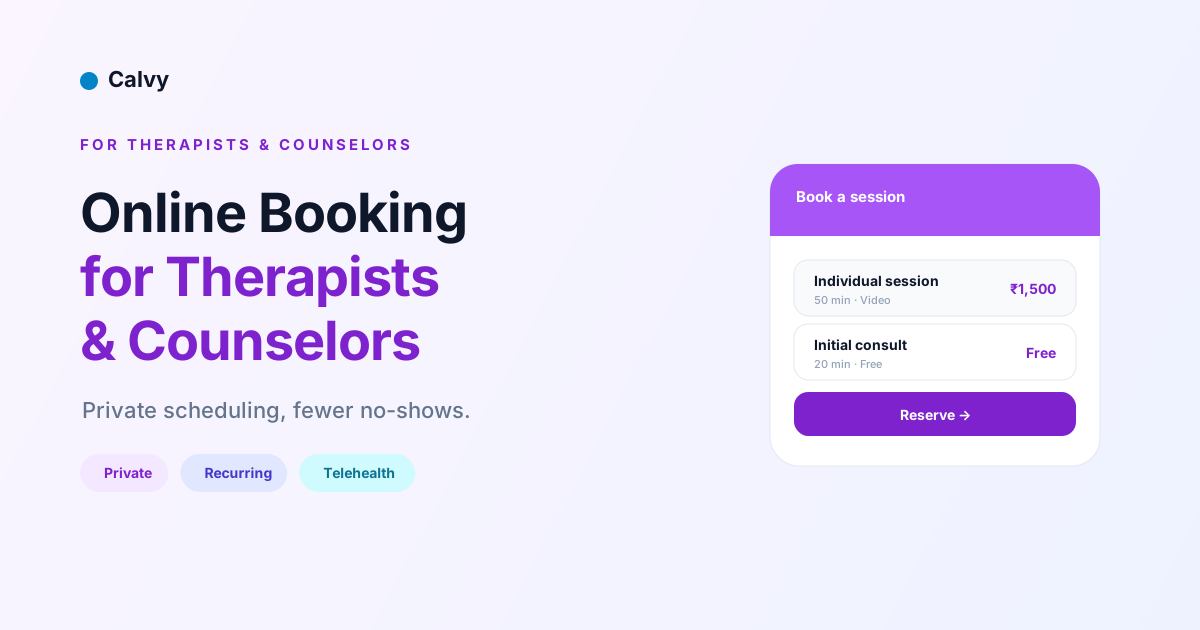
For therapists and counselors, scheduling carries a weight it doesn't in other professions. A client reaching out for the first time may be anxious and ambivalent; an awkward round of phone tag can be enough to put them off entirely. A missed session is more than lost income — it can mean a person didn't get the support they needed that week. And the administrative load of managing appointments by phone and email steals time and energy better spent on clients. Online appointment booking addresses all of this, gently and effectively, when it's set up with care.
This guide is about exactly that care. We'll cover why online booking suits therapy so well, how to handle the privacy and sensitivity the work demands, and how to manage recurring sessions, payments, no-shows, cancellations, and telehealth — all in a way that respects both you and your clients. The goal is a calm, private, reliable booking experience that supports the therapeutic relationship rather than intruding on it.
Why therapists need online booking
The case for online booking in therapy starts with the client's experience of reaching out. For many people, picking up the phone to book a first therapy session is genuinely hard — it means explaining themselves to a stranger at a vulnerable moment. Online booking removes that barrier entirely: a client can find your availability and book a session quietly, on their own time, without a conversation they're not ready to have. That lower barrier means more of the people who need support actually take the first step.
Beyond that first contact, online booking brings order to a practice that's often run in the margins between sessions. Instead of returning calls and trading emails to find a time, clients self-schedule into your genuine availability, with confirmations and reminders handled automatically. You reclaim the hours that scheduling admin quietly consumes, your no-shows drop, and your practice runs more smoothly — all of which lets you give more of your attention to the work itself.
The privacy and confidentiality dimension
Therapy is built on trust and confidentiality, so any booking system you use has to honour that. This shapes both the software you choose and how you configure it. Choose a tool that handles client data securely and discreetly, and that won't expose sensitive information in confirmations or reminders. A reminder that simply says "you have a session booked for Thursday at 3 p.m." respects privacy in a way that a message naming the nature of the appointment would not.
Configuration matters as much as the software. Keep your booking page wording warm, professional, and non-judgmental, so clients feel safe from the first click. Be thoughtful about what information you ask for at booking — gather what you genuinely need and no more, since an intrusive intake form at the booking stage can feel clinical and off-putting. And make sure the whole experience signals discretion, because for therapy clients, the sense that their privacy is respected isn't a nice-to-have — it's foundational to whether they'll engage at all.
Instant booking vs consultation-first
Decide how you want new clients to enter your practice, because therapy often benefits from a gentler on-ramp than instant booking. Some therapists are happy for new clients to book a full session directly. Many prefer to offer a brief initial consultation — often a short, free or low-cost call — so both sides can sense whether they're a good fit before committing to ongoing work. Booking software supports either model.
For established clients, instant booking of regular sessions is ideal: they know the arrangement and just need a convenient way to reserve their time. For new clients, a consultation-first flow can feel more humane and reduce the awkwardness of a stranger booking straight into a 50-minute session. You might configure your booking page to offer a "free 15-minute consultation" prominently for new clients while letting existing clients book full sessions directly. Matching the booking flow to where someone is in their journey with you makes the whole experience feel considered rather than transactional.
Handling recurring weekly sessions
Much of therapy runs on regularity — a standing weekly or fortnightly session at the same time becomes part of a client's routine and supports the therapeutic work. Good booking software handles this through recurring appointments, letting you and a client set a regular slot once and have it repeat automatically, with reminders before each session. This removes the need to rebook every week and protects that consistent time both of you rely on.
Flexibility within the routine matters too. A client should be able to reschedule a single session when something comes up — without unravelling the standing arrangement — and you should be able to pause or adjust the series during a break or holiday. The system should make these changes easy while keeping the regular slot otherwise protected. Handling recurring sessions well is one of the clearest signs that booking software fits a therapy practice, because the steady, repeating appointment is the backbone of so much of the work.
Taking payment for sessions
Money sits awkwardly in the therapy room, and handling it at the start or end of an emotionally significant session can feel jarring for both therapist and client. Online booking offers a graceful solution: collect payment, or a deposit, when the client books, so the financial side is settled quietly in advance and never intrudes on the session itself.
Taking payment up front also secures the appointment and reduces no-shows, since a paid session carries a commitment. You can configure this to suit your practice — full payment at booking, a deposit, or payment for the initial consultation only. Modern booking software collects payment through cards, wallets, and UPI, so clients pay in seconds; Calvy handles this natively via Razorpay. Removing money from the room isn't just convenient — it protects the therapeutic space, letting the session begin and end on the work rather than on a transaction. The wider mechanics are covered in our guide to accepting online payments for appointments.
Reducing no-shows and late cancellations
No-shows and late cancellations are a particular challenge in therapy. A missed session is a lost slot you usually can't fill at short notice, and a pattern of missed sessions can also reflect something worth attention in the work itself. Booking software helps on the practical side through two familiar levers, applied sensitively.
Automatic reminders address simple forgetfulness — a discreet confirmation at booking and a reminder a day or two before keep the session on the client's radar without being intrusive. A clear cancellation policy, often paired with a deposit or a notice requirement, addresses late cancellations by giving clients a reason to give you warning rather than dropping out at the last minute. The aim isn't to penalise vulnerable people but to protect a shared commitment and your livelihood. Set with care and communicated kindly, these tools meaningfully reduce empty slots while respecting the realities of clients' lives. Our guide to reducing appointment no-shows covers the broader approach.
Cancellation policies that respect both sides
A cancellation policy in therapy needs to balance two legitimate interests: protecting your time and income, and remaining compassionate toward clients whose lives are sometimes in genuine difficulty. The right policy is clear, fair, and communicated up front, so there are no unpleasant surprises. Many therapists ask for 24 or 48 hours' notice to cancel without charge, which gives a fair chance to offer the slot to someone else.
Booking software lets you set and enforce this policy automatically — defining the notice period, and optionally taking a deposit that's forfeited for late cancellation. The key is to present it warmly at the point of booking, framing it as a mutual agreement that protects the work, not as a threat. It's also wise to retain the discretion to waive a charge when circumstances clearly warrant it; the software enforces the default, but you remain the human in the loop. A well-judged cancellation policy reduces casual late cancellations while preserving the trust and care that define the therapeutic relationship.
Reminders done sensitively
Reminders are essential for reducing no-shows, but in therapy they must be handled with particular care. The content of every reminder should be discreet — confirming a time without disclosing the nature of the appointment, so that a glance at a phone on a shared kitchen table reveals nothing private. The tone should be warm and simple, never clinical or pushy.
The timing and channel matter too. A confirmation at booking and a single, gentle reminder before the session usually strike the right balance; bombarding a client with messages can feel intrusive. Where possible, let clients have some say in how they're reminded, since preferences vary. Good booking software gives you control over reminder wording, timing, and channel, so you can tune them to your practice and your clients. Done well, reminders quietly support attendance while honouring the privacy and dignity that therapy requires — present enough to help, discreet enough to respect.
Telehealth and video sessions
Remote and hybrid therapy has become a permanent part of the landscape, and booking software handles it seamlessly. For video sessions, the system can schedule the appointment, generate or attach the meeting link, and include it in the confirmation and reminders, so both therapist and client have it exactly when they need it without any fumbling. Payment can be taken in advance just as with in-person sessions.
This makes offering teletherapy genuinely easy. A client books a video session the same way they'd book in person, pays up front, and receives a reminder with the link — and you simply join at the appointed time. For practices offering a mix of in-person and online care, booking software that supports both lets clients choose what suits them, widening your reach to people who can't easily travel and supporting continuity when a client moves or travels. The smoother the logistics, the more the technology fades into the background, leaving the focus where it belongs: on the session.
Managing your availability and boundaries
Therapists need boundaries more than most professionals — the work is emotionally demanding, and protecting your energy is part of doing it well. Booking software helps you set and hold those boundaries by giving you precise control over your availability. You decide exactly which hours are bookable, how many sessions you'll see in a day, and how much buffer you need between them to write notes and reset.
Because clients can only book within the availability you define, the software quietly enforces your boundaries without you having to negotiate them session by session. You can build in breaks, block out time for your own supervision and admin, and prevent the back-to-back overload that leads to burnout. This is one of the underrated benefits of online booking for therapists: it isn't just about client convenience, it's about protecting the sustainability of your practice. A system that lets you shape your week deliberately, rather than reacting to whoever calls, helps you keep doing this work for the long term.
Group sessions and workshops
Many therapists and counselors run more than one-to-one work — group therapy, support groups, workshops, and courses are a growing part of many practices, and booking software handles them well. For a group session, the system can offer a set number of places, taking bookings until the group is full and then closing it, so you never end up over-subscribed or manually tracking a waiting list on paper.
This makes running groups far less administrative. Participants book and pay their place online, receive reminders, and get any joining details automatically, while you see your roster at a glance. For workshops and courses, the same capacity-aware booking lets you sell places, manage numbers, and communicate with attendees without the spreadsheet juggling that usually accompanies group work. Offering groups online also widens access, letting people find and join without an awkward enquiry. If group and workshop offerings are part of your practice, booking software that handles capacity cleanly turns them from an admin headache into a smooth, scalable part of what you do.
Reducing the anxiety of a first appointment
The first appointment is the hardest step for many therapy clients, and a thoughtful booking experience can ease that anxiety in small but meaningful ways. Simply being able to book online — without rehearsing what to say on a phone call — removes a real source of dread for people who find that initial contact daunting. The quiet, self-directed nature of online booking suits the moment.
Beyond the mechanics, the wording and feel of your booking page do emotional work. Warm, reassuring language, a clear explanation of what a first session involves, and the option of a brief no-pressure consultation all help a nervous client feel safe enough to take the step. A confirmation that gently tells them what to expect — where to go or how to join, what to bring, that it's okay to feel uncertain — continues that reassurance. Booking software that lets you shape this experience with care turns a potentially intimidating first contact into a gentle, welcoming one, which is precisely when it matters most.
Integrating booking with your website and directories
For clients to book online, they need to find your booking page easily, so think about where it lives. The most important placement is your own website, where a prominent "Book a session" button should be among the first things a visitor sees, ideally on every page. Clients who've decided to reach out shouldn't have to hunt for how.
Beyond your site, your booking link belongs wherever potential clients discover you — your profiles on therapy directories, your Google Business Profile, and any professional listings. Making it effortless to move from finding you to booking a session removes a point where hesitant clients might otherwise drop away. Booking software that provides a simple shareable link, and that embeds cleanly into a website, makes this easy. The smoother the path from discovery to a booked first session, the more of the people who need support actually arrive — which is, ultimately, what the whole practice exists to make possible.
What therapist booking software costs
Cost is a fair consideration for a practice often run by a sole practitioner. The good news is that booking software is inexpensive relative to the time it saves and the no-shows it prevents. Most tools are sold on a predictable monthly subscription, with simple, solo-friendly plans at the affordable end; be wary of per-booking pricing that scales with your caseload. On top of the subscription you'll pay standard payment-processing fees on the sessions or deposits you collect.
Weigh that modest cost against what it returns: hours of scheduling admin reclaimed each week, fewer empty slots from no-shows and late cancellations, and a more professional, accessible experience that helps new clients take the first step. For most therapists, the software pays for itself quickly, and the reduction in administrative load alone — freeing energy for the actual work — is worth far more than the subscription. It's one of the highest-value, lowest-cost investments a small practice can make.
Continuity, records, and a calmer practice
Therapy depends on continuity, and booking software quietly supports it by keeping a clear, organised record of each client's appointments over time. Knowing at a glance when you last saw someone, what's scheduled next, and the rhythm of their attendance helps you hold the thread of the work, especially across a full caseload where details are easy to lose.
This isn't about clinical note-taking, which belongs in your secure records, but about the scheduling layer that surrounds it — a dependable picture of who's booked, who's due, and who may have drifted out of regular attendance. That visibility lets you notice when a client has slipped and reach out, supporting continuity of care rather than leaving it to chance. It also makes your whole practice feel calmer and more in control, because the administrative side is handled and trustworthy. When the logistics are quietly taken care of, you can hold your attention where it belongs — fully present with each client, session after session, without part of your mind tracking a tangle of times and dates.
Setting up your therapy booking page
Going live is straightforward. A practical sequence:
- List your session types — initial consultation, individual session, couples session — with durations and prices, and decide which new clients should book first.
- Set your availability carefully, including buffers and the daily limits that protect your energy.
- Configure recurring options for ongoing clients.
- Turn on payment or deposits, and set a clear, kind cancellation policy.
- Add telehealth links if you offer video sessions.
- Write your booking page wording to be warm, private, and reassuring, then share the link discreetly with clients and on your site.
The setup is quick, and the result is a calm, private booking experience. Our Help Center covers each step.
Choosing therapist-friendly software
When you evaluate booking software for a therapy practice, weigh it against what the work specifically needs. Confirm it handles client data securely and keeps reminders discreet. Check it supports recurring sessions and easy rescheduling. Make sure it offers flexible payment and cancellation policies you can tune to your practice. Verify it handles telehealth if you offer it, and gives you fine control over availability and boundaries. And ensure the whole experience — booking page, confirmations, reminders — can be made warm and private rather than clinical.
Generic booking tools may tick the mechanical boxes but miss the sensitivity therapy requires, so prioritise software you can shape around discretion and care. The right tool disappears into the background, quietly handling the logistics so you can focus entirely on your clients.
The bottom line
For therapists and counselors, online booking is about far more than convenience — it lowers the barrier for anxious clients to reach out, protects the privacy the work demands, reduces the no-shows that cost both income and continuity of care, and guards the boundaries that keep you well enough to do this work. Set up thoughtfully, with discretion and warmth, it supports the therapeutic relationship instead of intruding on it.
Ready to offer your clients calm, private scheduling? Start free with Calvy and spend less time on logistics and more time where it matters — with the people you help.
Frequently asked questions
Why should therapists offer online appointment booking?
Online booking lets clients schedule privately without an awkward phone call, which many find easier when reaching out for therapy. It reduces no-shows through automatic reminders, protects your time with clear availability and cancellation policies, and removes the administrative burden of phone tag — letting you focus on clients rather than scheduling.
Is online booking private enough for therapy clients?
When set up thoughtfully, yes. A good booking system keeps client details secure, sends discreet reminders, and lets clients schedule without explaining themselves to anyone. Choose software that handles data carefully, and keep your booking page wording warm and non-judgmental. Privacy and discretion should be central to how you configure it.
How do therapists handle recurring weekly sessions with booking software?
Good software supports recurring appointments, so a client and therapist can set a regular weekly or fortnightly slot once and have it repeat automatically, with reminders before each session. Clients can reschedule individual sessions when needed without disturbing the standing arrangement.
Can booking software reduce therapy no-shows and late cancellations?
Yes. Automatic reminders reduce forgetfulness, while a clear cancellation policy — often requiring notice or a deposit — reduces late cancellations that leave a session slot empty. Easy self-service rescheduling also helps clients move a session rather than missing it entirely.
Does online booking work for teletherapy and video sessions?
Very well. Booking software can schedule video sessions, attach the meeting link to the confirmation and reminders, and handle payment in advance — making remote therapy seamless for both therapist and client. This is ideal for practices offering online or hybrid care.
How do therapists take payment for sessions online?
Booking software can collect payment or a deposit when a client books, through cards, wallets, or UPI. Taking payment in advance secures the session, reduces no-shows, and removes the awkwardness of handling money at the start or end of an emotionally significant appointment.